Understand the Flow of Retirement Money
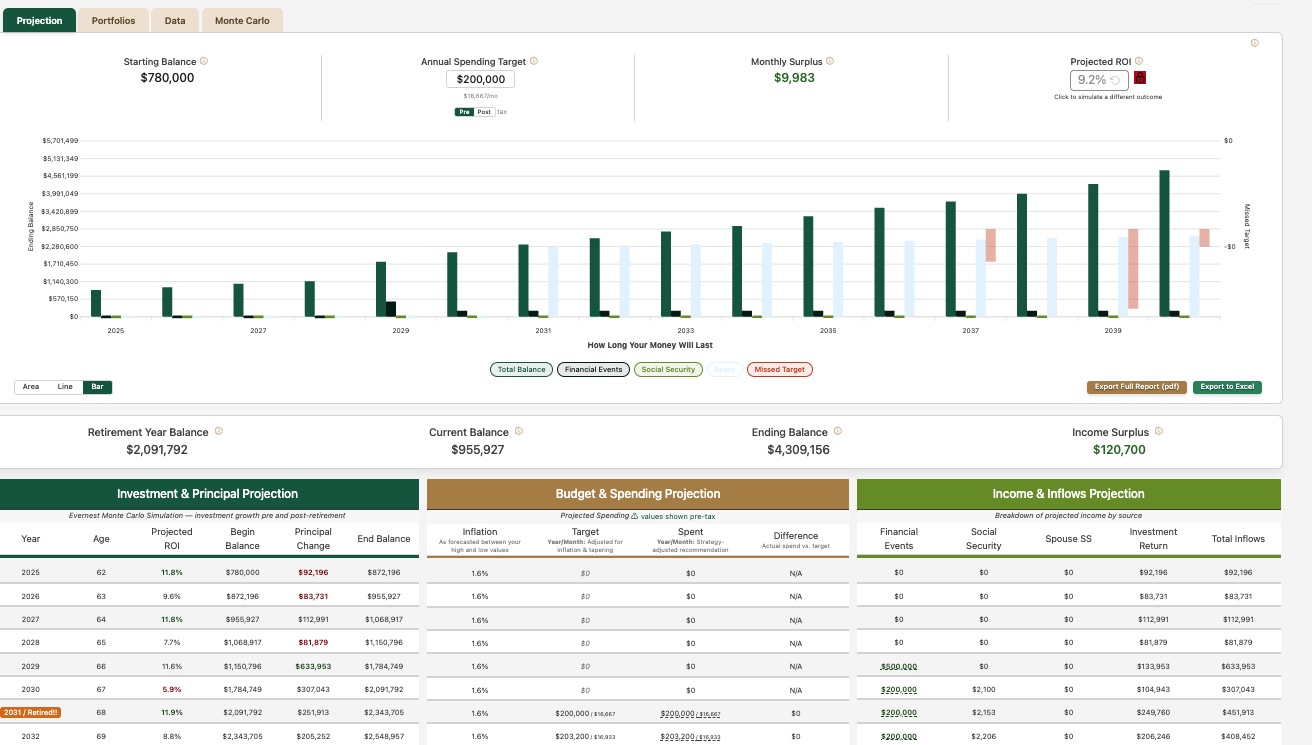
In your working years, cash flow is simple: money comes in from your paycheck, goes out to spending, and the remainder goes to savings. In retirement, the flow reverses and gets more complex. Money comes in from multiple sources — Social Security, pensions, portfolio withdrawals, maybe part-time work — and each source has its own start date, amount, and rules.
Cash flow planning maps this complexity into a clear, year-by-year picture. For every year of your retirement, you can see total inflows (all income sources), total outflows (spending), and the net effect on your portfolio. When inflows exceed outflows, your portfolio grows. When outflows exceed inflows, your portfolio shrinks. The rate of shrinkage — and whether it's sustainable — determines whether your retirement plan works.
Evernest organizes your cash flow into three projection tables that work together. The Investment & Principal Projection tracks your portfolio. The Budget & Spending Projection tracks your outflows. The Income & Inflows Projection tracks your income sources. Together, they tell the complete story of how money moves through your retirement.
Identify Pressure Points and Gaps
Every retirement has periods of higher and lower financial pressure. The years between retirement and Social Security are typically the most stressful — your portfolio funds 100% of spending with no income support. Once Social Security begins, pressure drops significantly. If you have a pension or part-time income, pressure drops further.
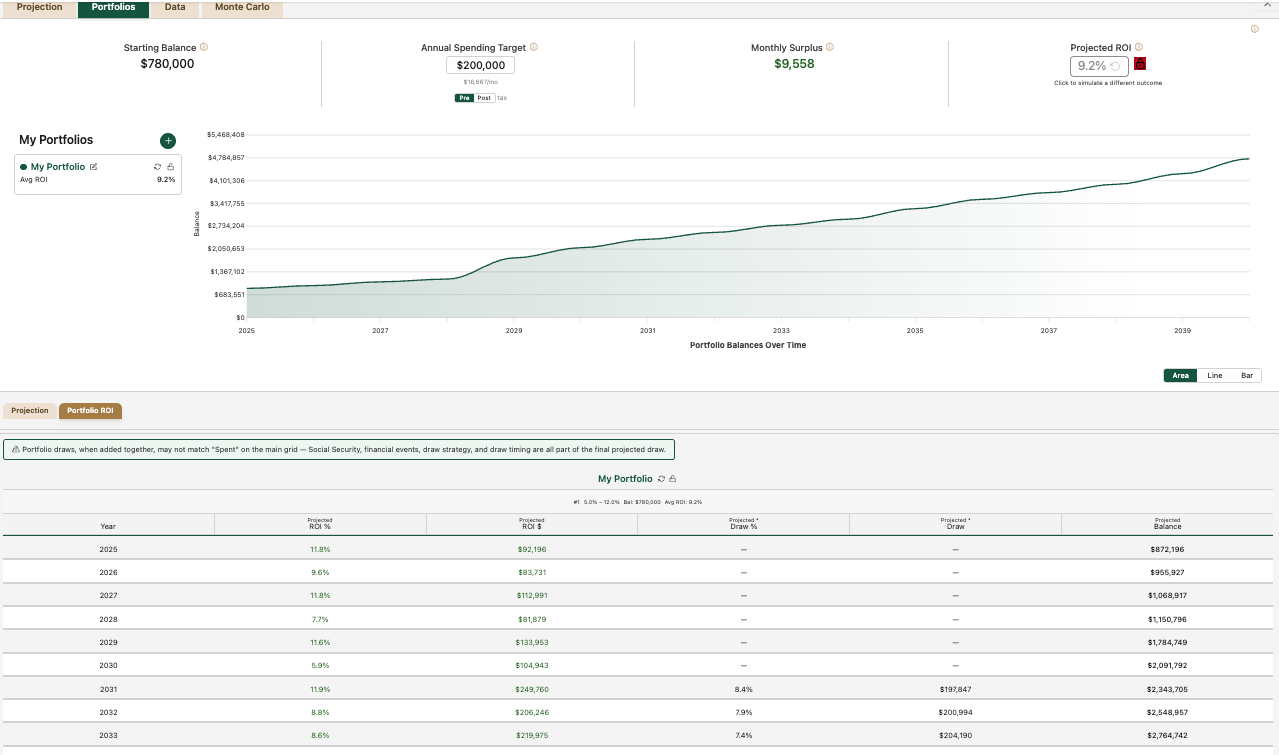
Evernest's income shortfall metric reveals these pressure points clearly. You can see exactly how much of your spending is uncovered by income in each year — and therefore how much your portfolio must absorb. The years with the largest shortfalls are your financial vulnerability points, and they're where planning has the most impact.
Understanding pressure points helps you make targeted decisions. If the gap years before Social Security are your biggest vulnerability, part-time work or early Social Security might make sense. If RMDs in your 70s create tax pressure, Roth conversions in your 60s can help. The cash flow view shows you where to focus your planning energy.
Optimize Your Cash Flow Strategy
Once you can see the cash flow, you can optimize it. The goal is smooth, sustainable withdrawals from your portfolio — avoiding years of heavy drawdowns that compromise long-term sustainability. Several strategies help achieve this.
Bridge income: Part-time work, consulting, or freelance income during the early retirement years fills the gap before Social Security starts. Even $12,000-$15,000 per year can cut portfolio withdrawals nearly in half during the most vulnerable period.
Taper spending: Your spending naturally decreases as you age. Modeling this taper reduces projected outflows in later years, taking pressure off your portfolio when it's been sustaining withdrawals the longest.
Strategic Social Security timing: Delaying Social Security increases the permanent income floor that reduces portfolio withdrawals for every year after claiming. The gap years require higher withdrawals, but the long-term reduction in portfolio pressure often more than compensates.
Frequently Asked Questions
What is retirement cash flow planning?
It's the process of tracking all money in and all money out for every year of retirement. The goal is ensuring inflows sustain outflows and your portfolio can handle the necessary withdrawals throughout your entire retirement.
How is cash flow planning different from budgeting?
Budgeting focuses on spending. Cash flow planning tracks the complete flow — where money comes from, where it goes, and the net effect on your portfolio. It tells you not just what you spend, but whether your spending is sustainable for 30 years.
What is an income shortfall?
The gap between annual spending and non-portfolio income (Social Security, pensions, work). This gap is filled by portfolio withdrawals. Evernest calculates your shortfall for every year, showing when it's largest and when income sources bring it down.
Related Resources
Retirement Cash Flow Calculator
Forecast income, expenses, and portfolio balance year by year.
Retirement Budget Planner
Build a realistic budget and stress-test it over 30 years.
Retirement Income Projections
See every income source projected year by year through retirement.
Retirement Forecasting Tool
Complete financial forecast through age 95+.
Plan Your Retirement Cash Flow
Track every dollar in and out of your retirement. See income, spending, and portfolio balance year by year — and make sure the flow sustains your lifestyle.
No credit card required · No signup needed for demo